Map the office before assigning frequencies
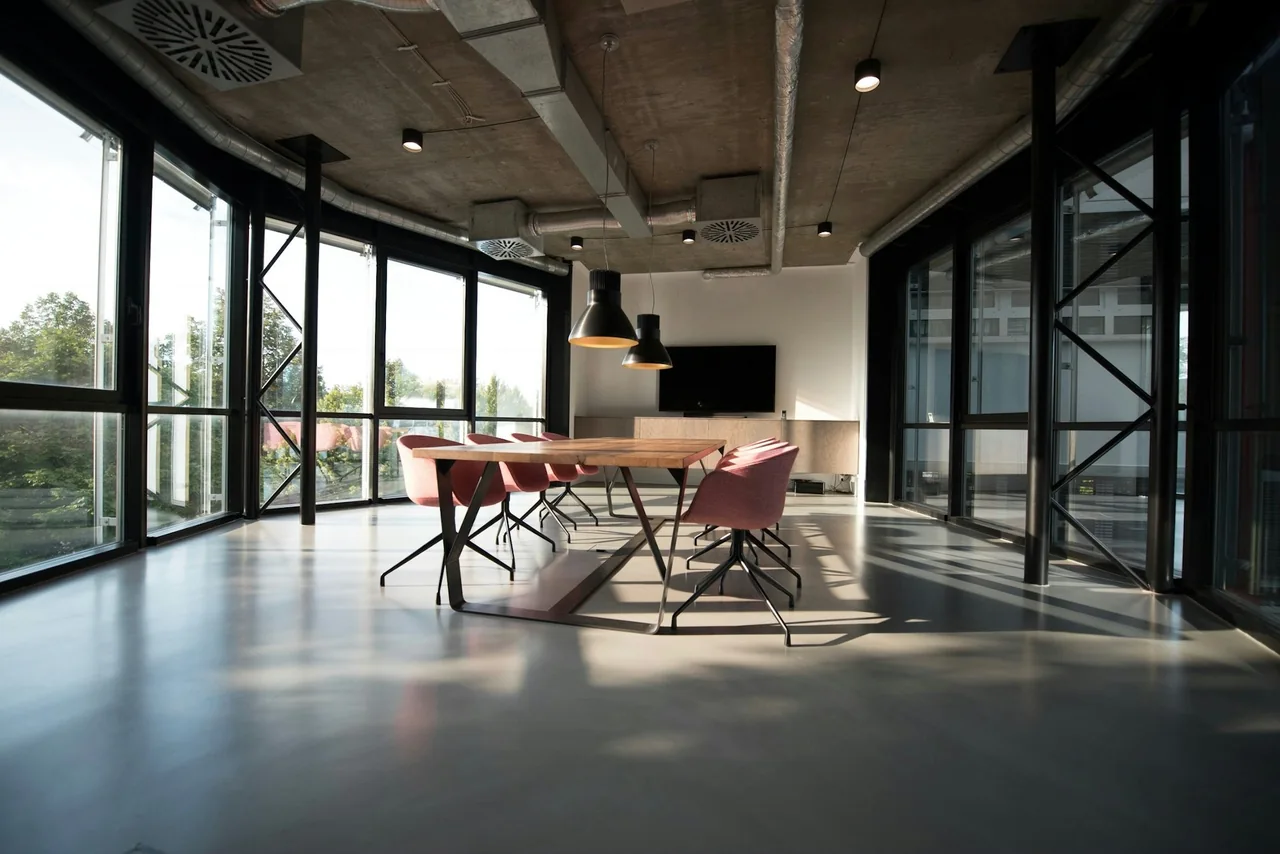
Divide the floor plan into reception, work areas, meeting rooms, restrooms, kitchens and circulation routes. Include storage or support rooms only when access is approved. Note when each area is busy. A hybrid office may have three crowded days and two quiet ones; cleaning the same way every night may not reflect that pattern.
Identify duties that belong to the building team, such as shared lobby maintenance, before asking a tenant cleaner to duplicate them. Then decide who handles immediate spills, daytime restroom checks and a full clean after hours. A written division of work is especially useful when staff assume someone else is responsible.

Use a practical every-visit checklist
The table below is a starting scope for an ordinary office, not a universal daily requirement. Adjust it for attendance, visitor use and the condition found on site. Name any locked areas and surfaces that must be left untouched.
Scroll sideways to see all columns.
| Office area | Tasks to consider at each scheduled visit |
|---|---|
| Reception | Clean accessible counters and door touchpoints; remove visible dirt from the entrance floor |
| Workstations | Empty agreed waste bins and clean clear, authorized work surfaces |
| Meeting rooms | Wipe cleared tables, straighten agreed items and check floors |
| Breakroom | Clean counters, sink and agreed appliance exteriors; remove ordinary waste |
| Restrooms | Clean fixtures, counters, mirrors and floors; replenish agreed supplies |
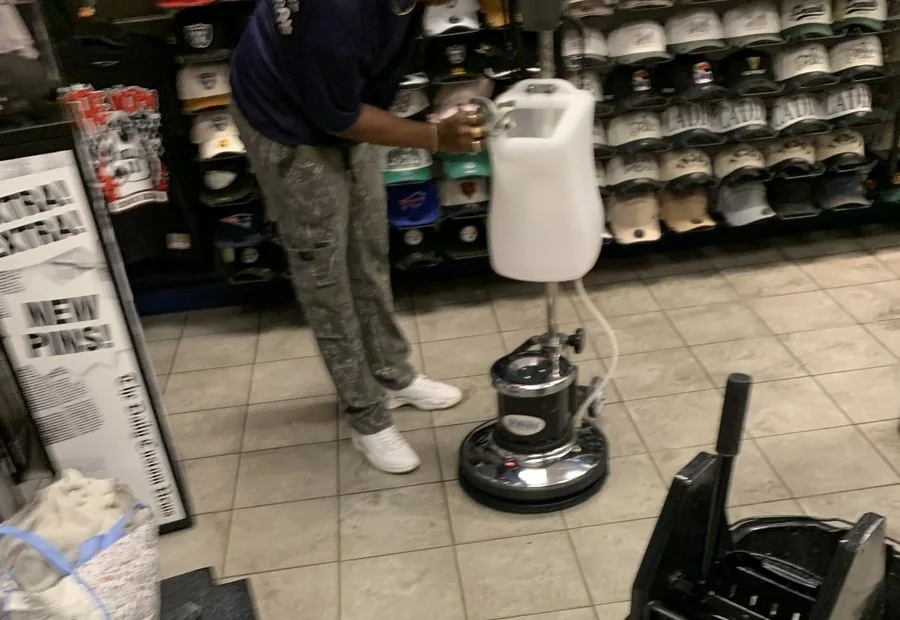
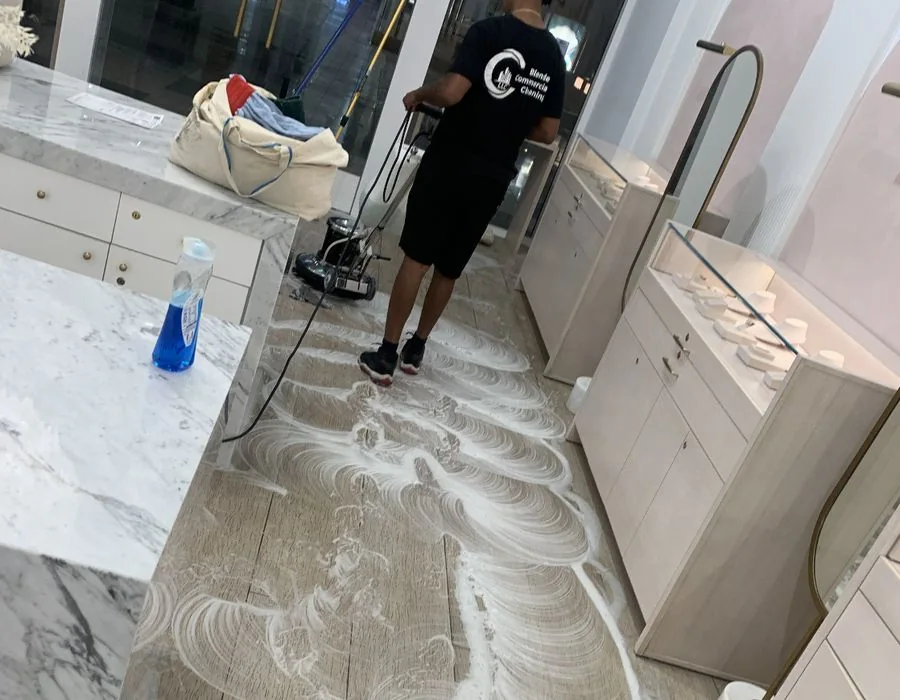
| Floor routes | Remove loose soil and clean accessible traffic areas with the appropriate method |
Set a clear-desk rule that respects people’s work
Tell staff what a “clear desk” means. A cleaner should not have to decide whether papers can be moved, a cable unplugged or a confidential file opened. Define which exposed surfaces can be cleaned, which objects should remain in place and how a skipped desk will be noted. The same rule should cover meeting rooms after late use.
Electronics need an agreed scope and the device manufacturer’s care instructions. Do not include keyboards, screens or shared equipment by implication. Assign responsibility for personal items, dishes and forgotten food as well. These small decisions remove repeated friction between employees, office managers and the cleaning crew.
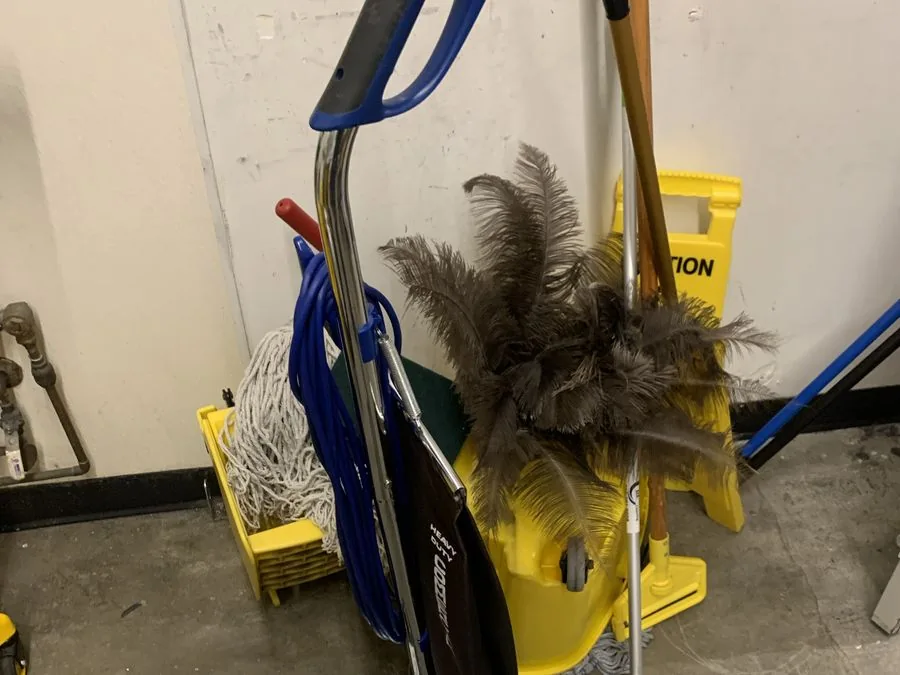
Put detail work on a separate calendar
Baseboards, accessible vents, partition glass and chair bases are easy to overlook when a checklist says only “dust office.” Name the detail task and choose a review interval that fits the room. Some sites need frequent attention at entrance edges; others need more work around occupied desks and shared eating areas.
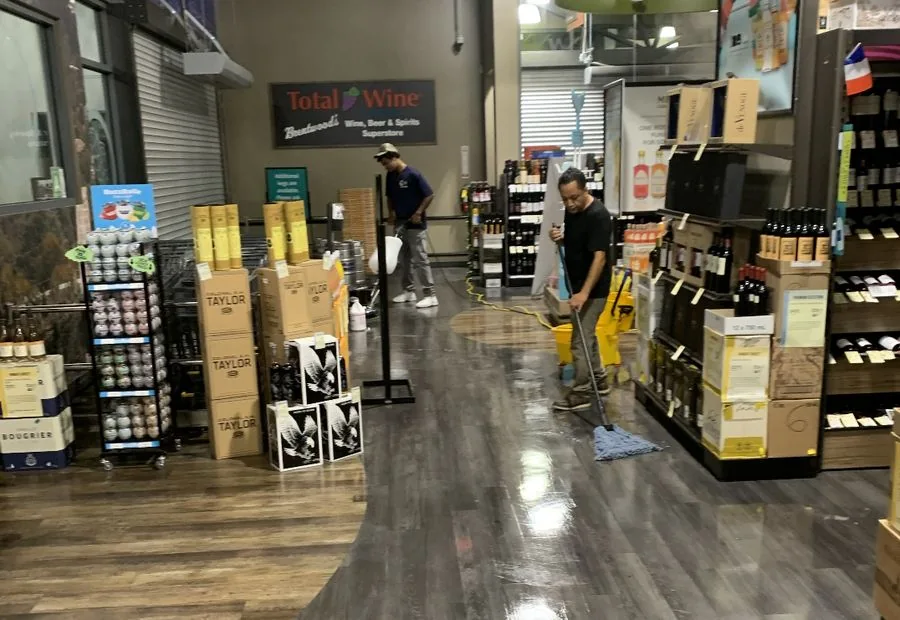
Plan carpet extraction, deeper hard-floor cleaning and other periodic services separately from routine upkeep. Ask about furniture movement, drying or return-to-use time and access to power or water. Avoid scheduling a wet floor process immediately before a large meeting or a delivery that needs the same route.
- List periodic tasks by room and surface.
- Record the last completion date and the next review date.
- Identify work that needs a separate quote or access arrangement.
- Revisit the calendar when occupancy or furniture changes.
Distinguish cleaning from disinfection
Cleaning removes dirt and other material from surfaces. Disinfection is a separate product-directed task when it is appropriate. CDC guidance for ordinary facilities calls for cleaning before disinfection and keeping surfaces wet for the product’s stated contact time. A quick spray and immediate wipe should not be described as completed disinfection.
Write the actual task in the scope instead of using a broad phrase such as “sanitize the entire office.” Identify the surfaces and any facility requirements. This guide covers ordinary offices; regulated settings need their own procedures. Avoid treating a strong fragrance as proof of a clean surface or a useful inspection measure.
Inspect a few meaningful points and record exceptions
Choose a short set of checks that reflects the whole office: an entrance corner, a meeting table, a restroom fixture, a breakroom counter and an accessible floor edge. Compare each point with the agreed task list. Record the room and issue precisely instead of leaving a note that the office “needs more attention.”
Give the cleaning contact a way to report locked rooms, low supplies, leaks or a room occupied during the visit. Review recurring misses to find the cause: unclear scope, unavailable access or a task that needs more time. Share your room list and preferred schedule with Blended when requesting office cleaning.