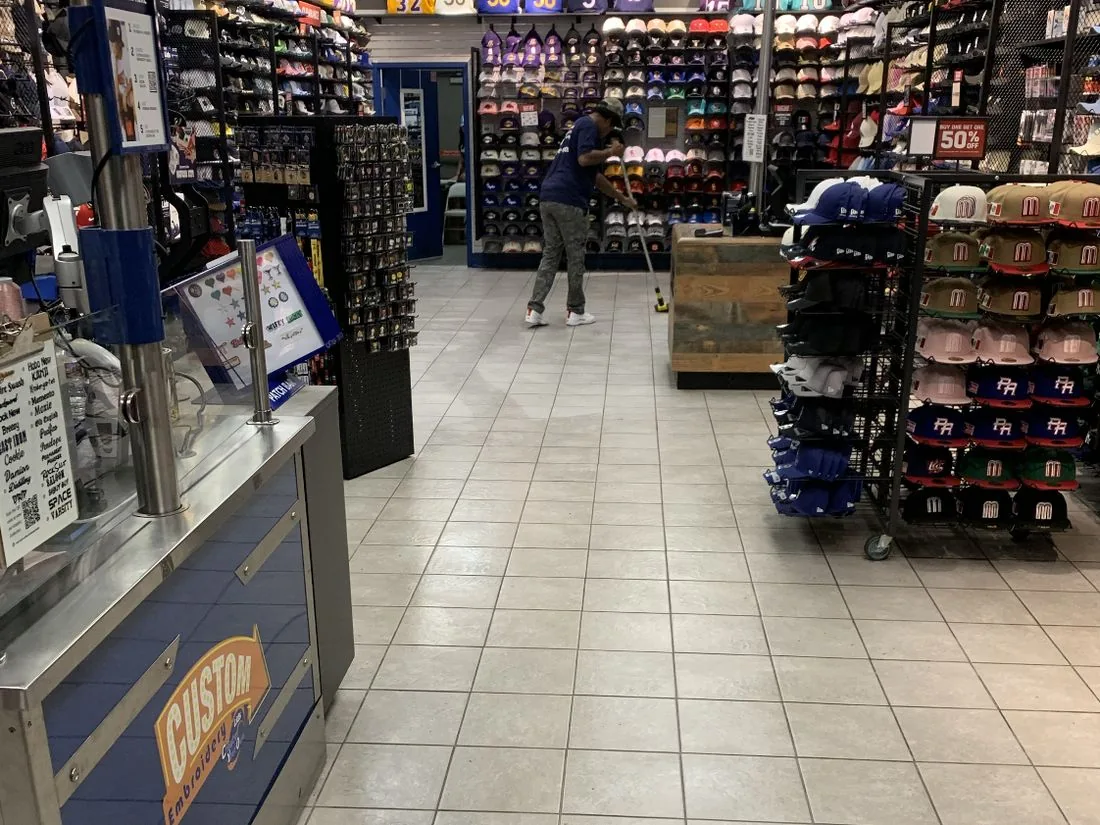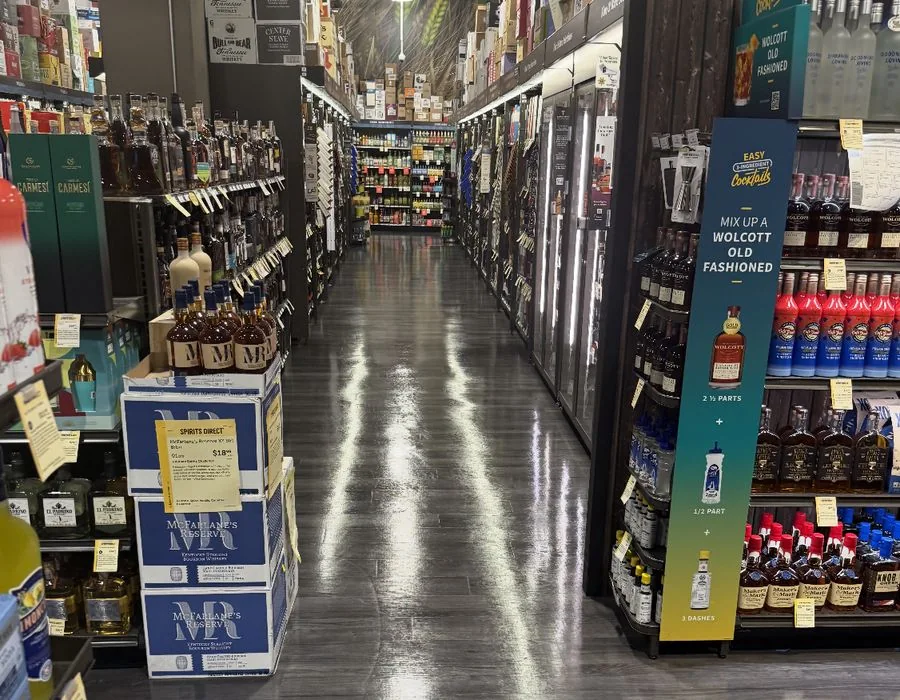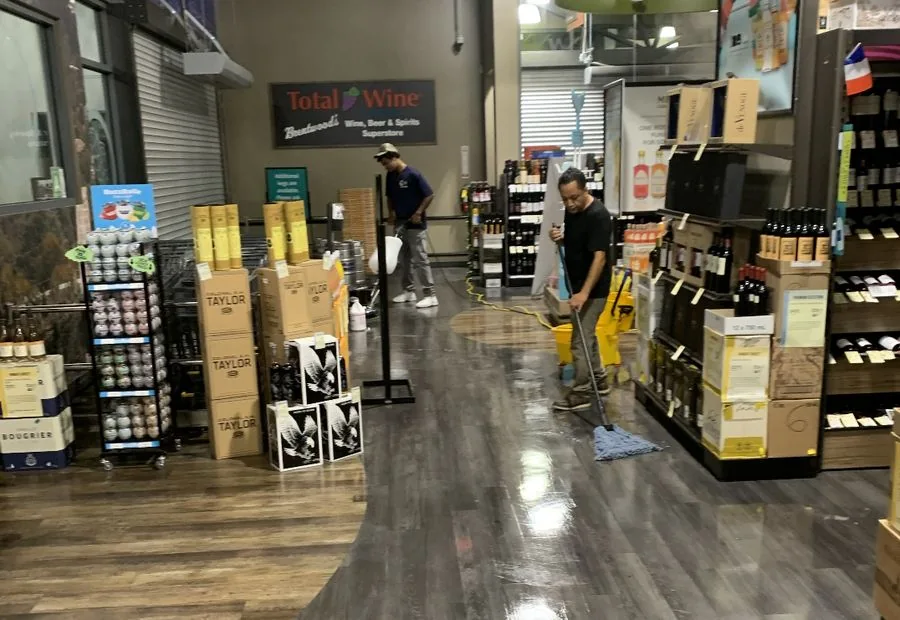
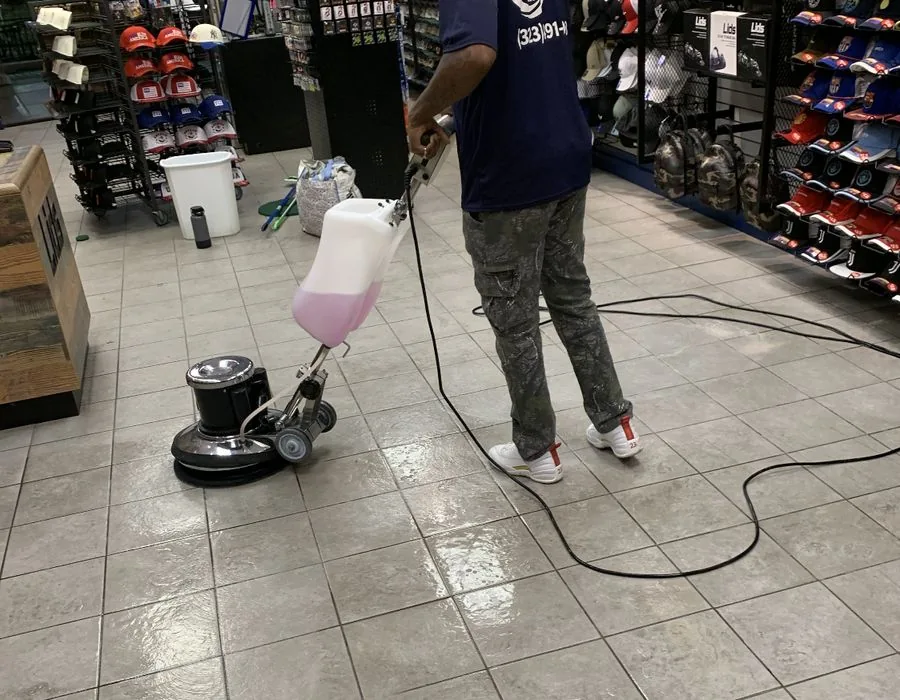
Identify the floor before choosing the treatment
Tile, luxury vinyl, concrete and finished wood can look similar in a wide photograph but require different care. If you know the product, send its name or maintenance sheet. If you do not, send close-ups of the surface, joints and an edge along with an overall view.
We also need to understand what is on the floor now. Traffic soil, cleaning-product residue and worn finish are different problems. An uneven sheen can come from past coatings or wear rather than dirt. A cleaning service should describe the condition it can address without promising to reverse permanent damage.
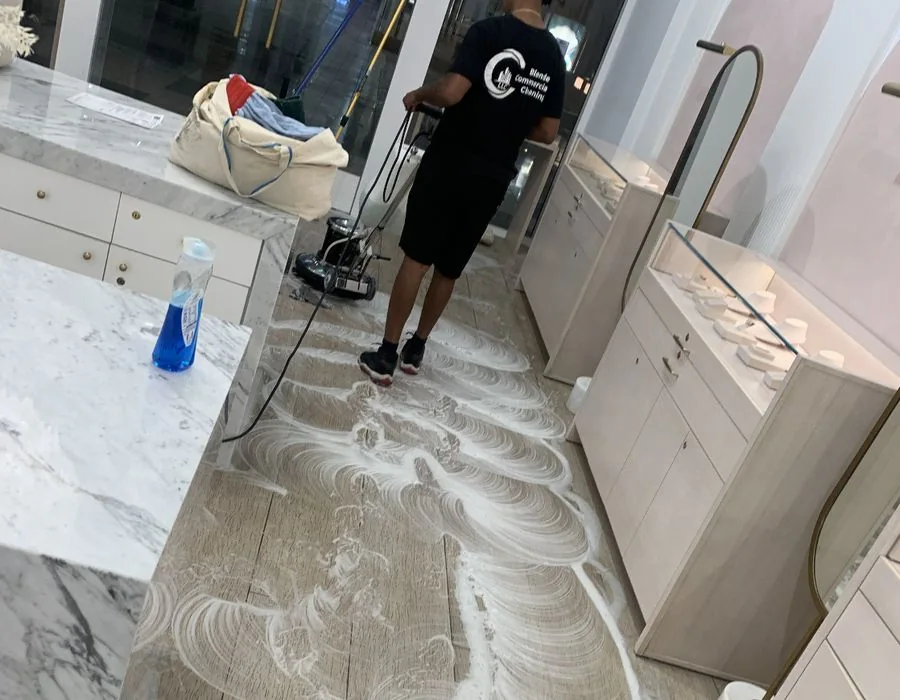
Floor cleaning options to discuss
Scroll sideways to see all columns.
| Floor or condition | Possible work | Useful detail to provide |
|---|---|---|
| Compatible hard floors | Machine scrubbing and soil removal. | Material, existing finish and areas with heavy traffic. |
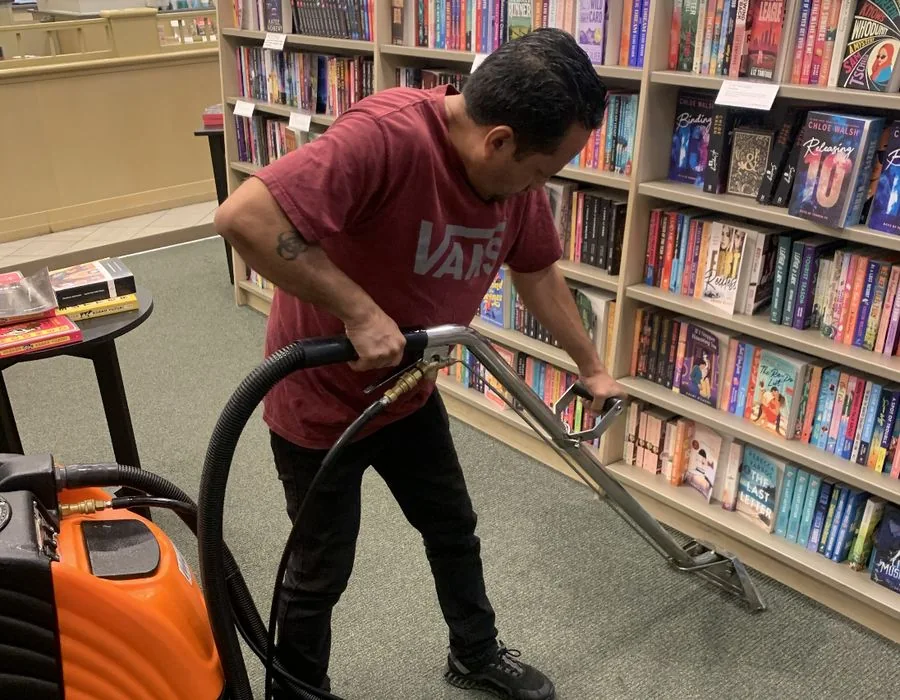
| Carpeted offices or stores | Vacuuming and separately quoted extraction. | Carpet type, staining, furniture and available drying window. |
| Tile and grout | Detail cleaning appropriate to the tile and grout. | Sealer history and close-ups of stained joints. |
| Floors with a maintained coating | Assess cleaning or finish-related work. | The coating product and previous maintenance history. |
Wax is not the answer to every dull floor
Some commercial floors are designed to be maintained without added wax or polish. Manufacturer instructions take priority over a one-size-fits-all treatment. For example, Tarkett publishes product-specific cleaning guidance for its luxury vinyl flooring; the correct process depends on the installed product.
If you are requesting stripping, coating or other finish work, name the existing floor and coating. We will establish whether that work is appropriate and available before including it. Routine cleaning, finish maintenance and floor restoration should appear as distinct items in a proposal.
Get the room ready for a better result
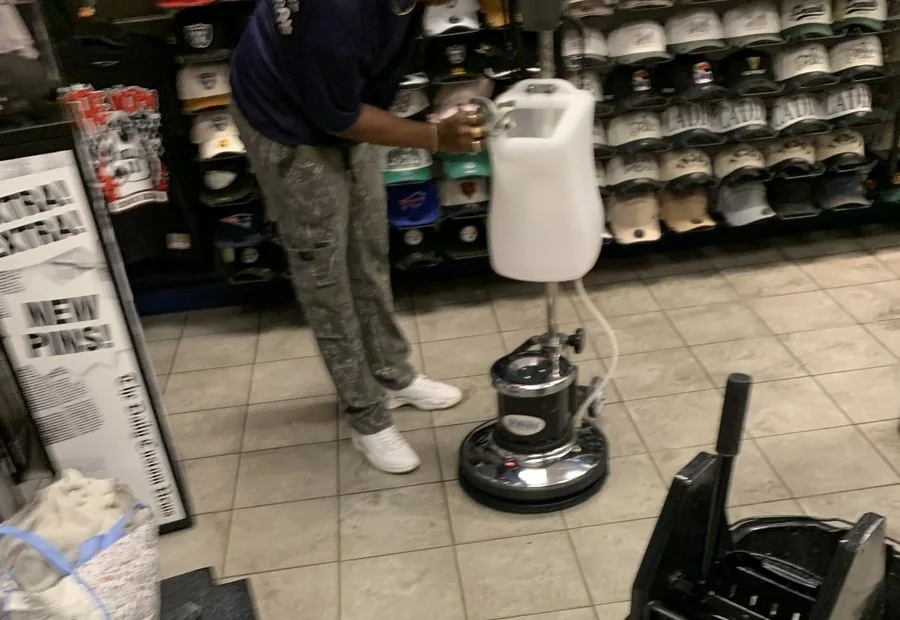
Floor work is easiest to price when the accessible area is clear. Mark heavy furniture, fixed displays and equipment that will stay in place. If chairs, mats or lightweight fixtures need to move, agree on who moves them and where they will be kept.
Check the route between the entrance and work area as well. Steps, narrow doors, elevators and the distance to water or disposal points can affect equipment access. For a multi-tenant building, tell us which entrances and corridors must remain available while one area is being cleaned.
- Share the floor material and any manufacturer care instructions.
- Identify loose, damaged or recently repaired areas.
- List furniture that will be moved before arrival.
- Provide the work window and the earliest return to foot traffic.
- Show nearby carpet, wood or other surfaces needing protection.
Plan the clean around drying and foot traffic
A floor is not ready for unrestricted use simply because the machine has left the room. Drying depends on the material, cleaning process and conditions in the building. Carpet extraction and any finish-related work can need a different reopening window from routine hard-floor cleaning.
Tell us about overnight staff, early deliveries and any access route that cannot close. Splitting the work into sections may be more practical than closing an entire floor. The proposal should identify those sections and any limits on moving furniture back afterward.
Request a floor cleaning quote
Send the location, approximate floor area, material and several clear photographs. Describe the marks or buildup you want removed and whether the work is one-time or part of recurring maintenance. If the material is unknown, David can discuss what information is needed at (323) 491-8008.