Get the floor product information first
Ask the landlord, installer or fit-out contractor for the flooring name and maintenance instructions. Keep the information with the store’s cleaning scope. Similar-looking floors can have different finishes, and an old maintenance method may be wrong after a refurbishment. Record any applied coating as well as the material underneath.
Tarkett’s vinyl guidance ties maintenance to the floor system and calls for following product dosage instructions. That is a useful reason to avoid one cleaner, pad or treatment for every store. The installed product’s instructions should determine the method; this guide is not a recipe for stripping, polishing or restoring an unidentified floor.
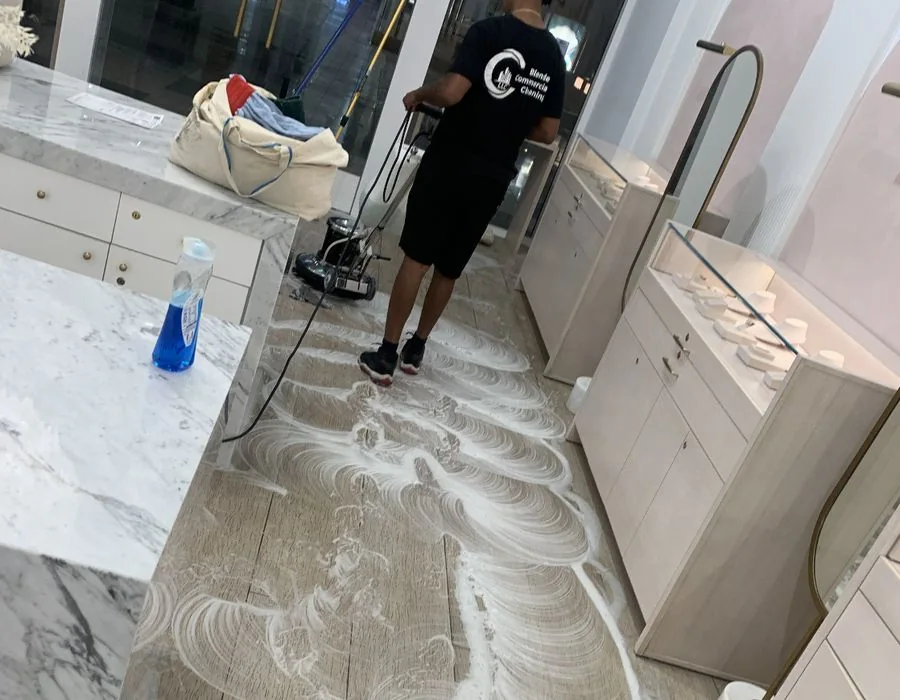
Separate loose dirt, buildup and physical damage
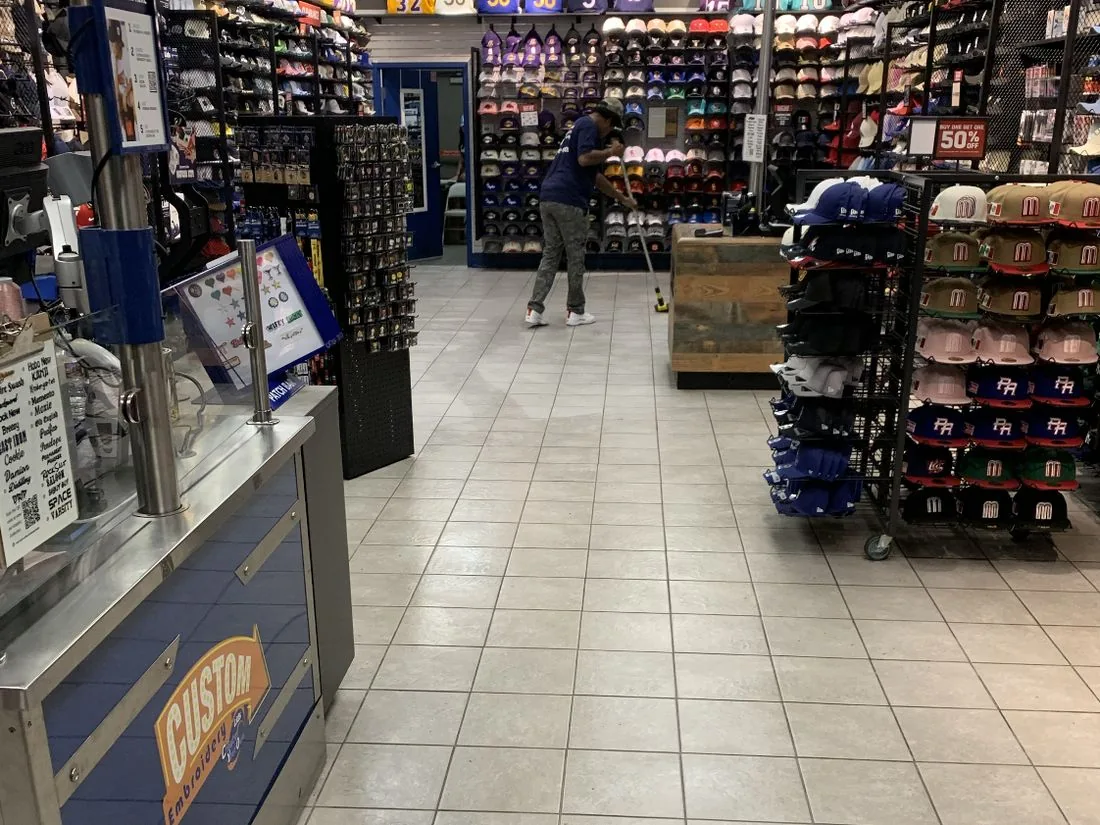
During the walkthrough, describe what you can see: loose grit at the entrance, marks around a fixture base, residue along an edge or wear in a traffic lane. Photos taken in consistent lighting help show where the problem occurs. Ask the provider to explain what the proposed cleaning is expected to address.
A scratched, discolored or damaged surface may need repair or specialist assessment rather than a stronger cleaning process. Agree on any uncertain result before work begins. Treat a test area as a chance to check the proposed method and appearance, not as permission to use it across every material in the shop.
Build the routine around the store layout
Map the routes used by customers, staff and deliveries. Put entrance mat care, accessible floor edges and the areas around movable fixtures on the schedule. State who moves fixtures and merchandise, and where those items can go without blocking the route needed for cleaning.
Scroll sideways to see all columns.
| Zone | Questions for the cleaning scope |
|---|---|
| Front entrance | Who checks the mat, visible grit and the transition into the sales floor? |
| Checkout | Can the crew reach under counters and around queue fixtures? |
| Fitting rooms | Are rooms clear of stock, hangers and personal items at the visit? |
| Display areas | Which fixtures can be moved, by whom and on what dates? |
| Stockroom | Which floor routes remain accessible after deliveries? |
| Shared corridors | Does the store or property manager arrange this work? |
Schedule periodic work before it becomes a surprise
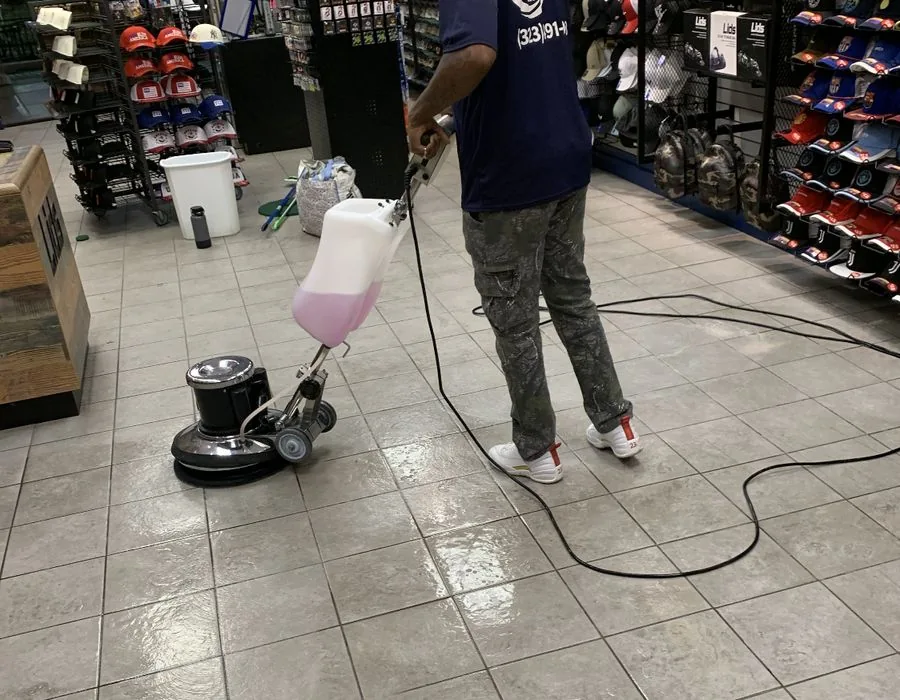
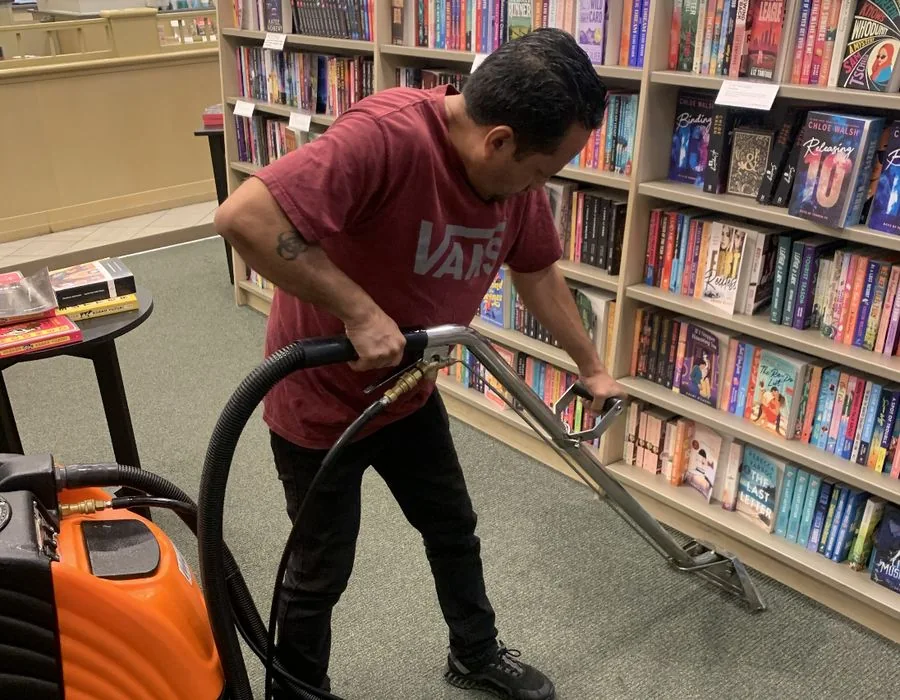
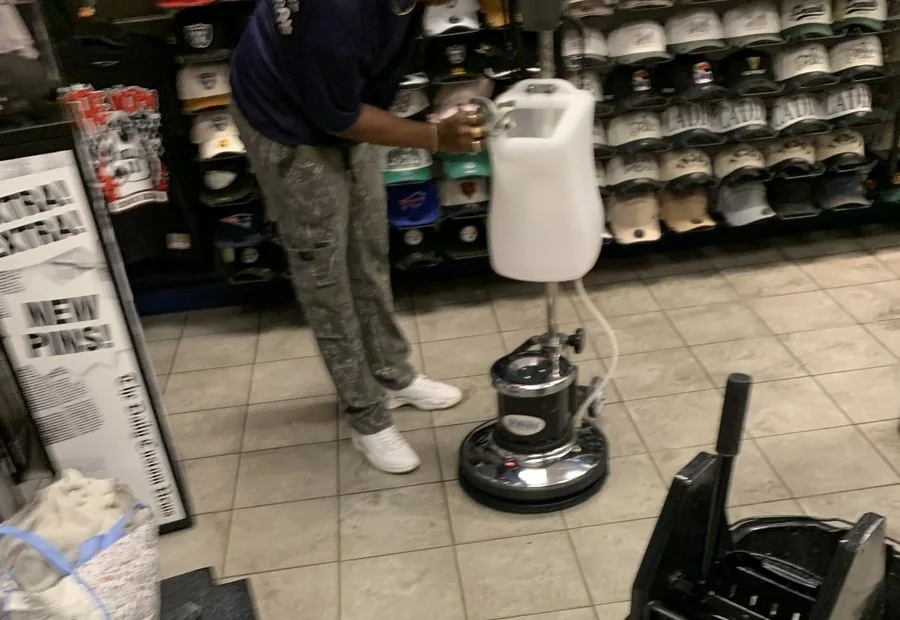
Routine cleaning and periodic floor care should appear as separate tasks. The periodic work might involve more detailed cleaning of accessible edges or a material-specific machine process. Ask the provider to state the area, method, access requirements and expected time before the floor returns to normal use.
Plan around stock changes, seasonal displays and deliveries. An empty fixture bay can be a useful opportunity to clean an area that is usually blocked. If a treatment requires the store to remain closed or objects to stay off the floor, confirm that arrangement with the store and building contacts before booking.
Agree on safe access while work is underway
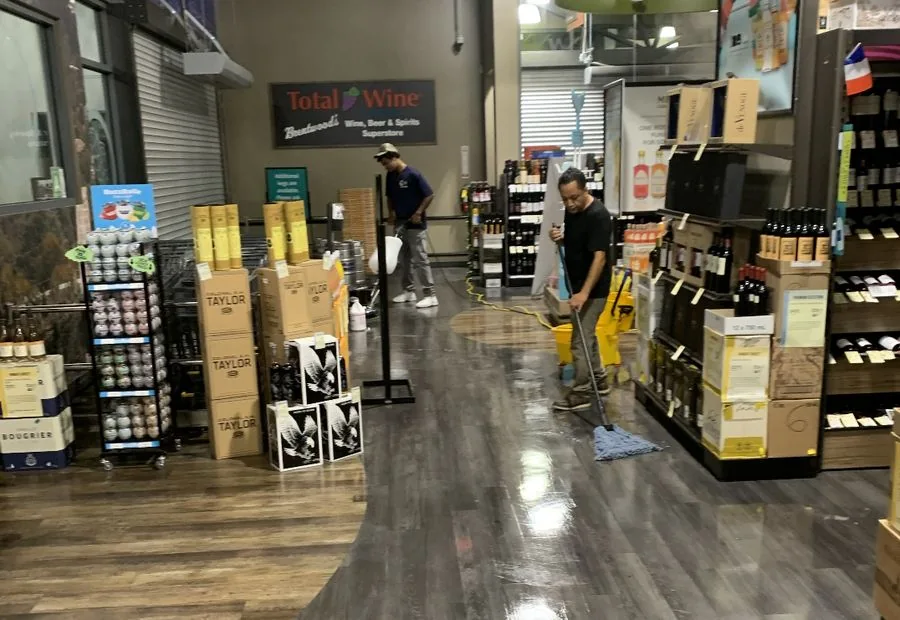
A cleaning plan needs a way to keep shoppers and staff away from the active work area and to preserve an agreed route through the store. Discuss how the area will be marked and who controls access. Do not assume the closing manager knows that a particular corridor will be unavailable.
Confirm water, power, equipment access and the building’s arrangements for collecting and disposing of cleaning wastewater. If work affects a common entrance or loading route, involve the property manager. A technically suitable cleaning process still needs practical space and time to be completed properly.
- Confirm the work area and the available access window.
- Identify an alternate route where needed.
- Coordinate fixture movement and deliveries.
- Agree on the return-to-use check before reopening the area.
Inspect the result in the areas customers actually use
Review the entrance, main aisle, checkout and a sample of the agreed edges. Check for visible soil, missed sections and cleaning residue under the store’s normal lighting. Compare the result with the scope and any test area; gloss alone does not establish whether the agreed cleaning was completed.
Record problems by location and update the schedule if the same zone repeatedly needs extra attention. When requesting retail floor care from Blended, send the floor material if known, approximate area, photos, store hours and fixture-access details. That gives the discussion a concrete starting point.